

Discover space with the Space Monitor
Lately I’ve been working on a new project: the Space Monitor. You pick something in the sky, and a small rocket points to where it is from where you are. The rocket keeps following it, so you always know where to look.
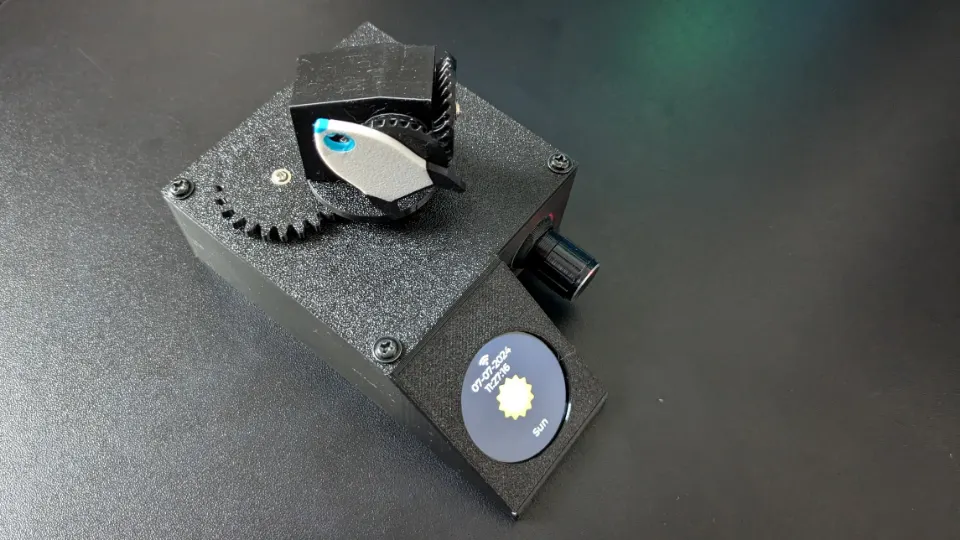
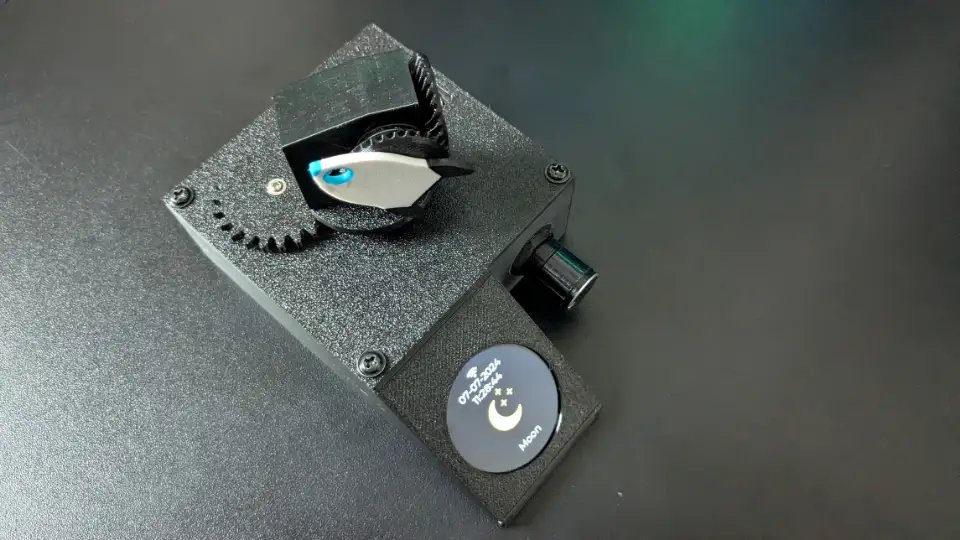
The Space Monitor is still in development. Right now it can find the sun and the moon, based on your location, the date and the time. Soon other objects will follow, such as the planets and the International Space Station.
Space has always fascinated me. With the Space Monitor I want to give everyone, from amateur astronomers to curious stargazers, a fun and easy way to explore what’s happening above us.
What it can do now
Connecting to Wi-Fi
- Time and date are fetched automatically.
- Wi-Fi Easy Connect: on Android 10 and up, you scan a QR code and the device joins your Wi-Fi network, without typing in any details.
- Its own access point: the Space Monitor sets up its own Wi-Fi network. Connect to it with your phone to set it up quickly.
Setting it up
- On the device itself, with a rotary knob and a screen with a menu.
- Through a website that the Space Monitor hosts itself, where you can change every setting.
Rechargeable battery
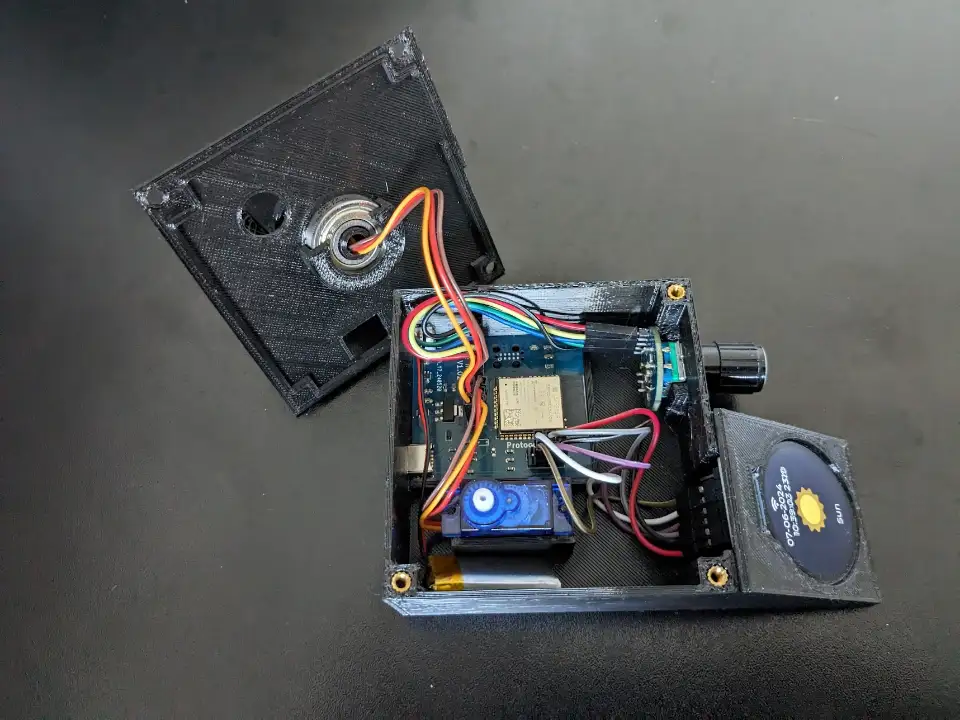
It has a rechargeable battery, so you can take the Space Monitor anywhere, with no power socket nearby.
What’s coming
- Updates over Wi-Fi, for better performance and new features.
- Clearer controls, so you can move through the menu easily and see straight away which object you’re following.
- More objects, such as Mars, Jupiter, Saturn and the ISS.
- The weather where you are.
- Looking ahead: showing how an object will move over the next 24 hours.
- Lower power use, so the battery lasts longer.
So the Space Monitor is far from finished. I’ll write a follow-up post about the next steps soon.